

Prof. Julian Cheng
Great Bay University
(IEEE Fellow)
Julian Cheng received his B. Eng. degree in electrical engineering from University of Victoria, Victoria, BC, Canada, M.Sc. (Eng.) degree in Mathematics and Engineering from Queen’s University, Kingston, ON, Ph.D. degree in electrical engineering from University of Alberta, Edmonton, AB, Canada. His current research interests include wireless communication theory, wireless networks, optical wireless communications, and quantum communications. Dr. Cheng has served as a member of technical program committee for many IEEE conferences and workshops. He co-chaired the 12th Canadian Workshop on Information Theory (CWIT 2011) in Kelowna, Canada. In 2012, he chaired the 2012 Wireless Communications in Banff, Canada. Dr. Cheng also chaired the sixth IEEE Optical Wireless Communications Symposium at the 2015 IEEE Global Communications Conference. He now volunteers as an Area Editor for IEEE Transactions on Communications. In the past, he served as an Associate Editor for IEEE Transactions on Communications, IEEE Transactions on Wireless Communications, IEEE Communications Letters, and IEEE Access, and was a past Guest Editor for a special issue of IEEE Journal on Selected Areas in Communications on optical wireless communications. Currently, he serves as the President of the Canadian Society of Information Theory as well as the Secretary of IEEE Radio Communication Technical Committee within the IEEE Communication Society.

Prof. Zhiguo Zhang
Harbin Institute of Technology
Zhang Zhiguo is a Professor, Doctoral Supervisor, and a National-level Young Talent Expert. His main research directions include brain-computer interface (BCI), cognitive and affective computing, medical artificial intelligence, and brain-inspired intelligence. He develops advanced AI technologies such as BCI and affective computing, focuses on major brain diseases like emotional disorders and cognitive impairments, develops new neural decoding algorithms and personalized brain-computer interaction systems, explores precise diagnosis, treatment and rehabilitation technologies, and builds a system platform for early screening and precise intervention of brain diseases (with primary focus on depression, dementia, and pain).
He has published more than 160 SCI papers, over 150 conference papers, and holds more than 20 patents. He compiled a book on EEG (electroencephalogram) processing (available in both Chinese and English versions), with downloads and purchases exceeding 100,000 times per copy, and the book has been listed among the Top 1% Highly Cited Books by CNKI (China National Knowledge Infrastructure). He has undertaken more than 20 research projects funded by the National Natural Science Foundation of China (NSFC), as well as institutions from Guangdong Province, Shenzhen City, Hong Kong (China), and Singapore. His work in non-invasive neural interfaces won the First Prize of the Natural Science Award of the Ministry of Education in 2020 and the Second Prize of the Natural Science Award of Beijing Municipality in 2022. He has been selected into Stanford University's list of "World's Top 2% Scientists" for many consecutive years, and was included in the "Lifetime Scientific Influence List" sub-list in 2023.
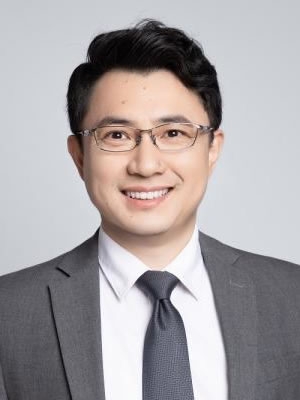
Prof. Yao Lu
Sun Yat-sen University
Yao Lu received the bachelor's degree in mathematics from the University of Science and Technology of China, Hefei, China, the master's degree from the Institute of Mathematics, Chinese Academy of Sciences, and the Ph.D. degree in mathematics from Syracuse University, Syracuse, NY, USA. He is currently a Full Professor with the School of Data Science and Computer Science, Sun Yat-sen University, Guangzhou, China. Prior to joining Sun Yat-sen University, he was a Research Investigator with the Department of Radiology, University of Michigan, Ann Arbor, MI, USA. His research interests are in image processing, medical image analysis, and ill-posed problems.